Let’s Revise! – 21 Online Payment Definitions You Should Know
From the outside it may seem that online payments are easy. You just need to attach your webpage to a paying agent of your choice and swoosh, ready to go. The money just starts flowing.
From the outside it may seem that online payments are easy. You just need to attach your webpage to a paying agent of your choice and swoosh, ready to go. The money just starts flowing.

When you’re planning to open up an online store, sooner or later you will have to decide on a payment solution. This doesn’t just mean choosing payment methods to help your business grow by letting various customers from all over the world buy, but it also means choosing the right way to integrate.
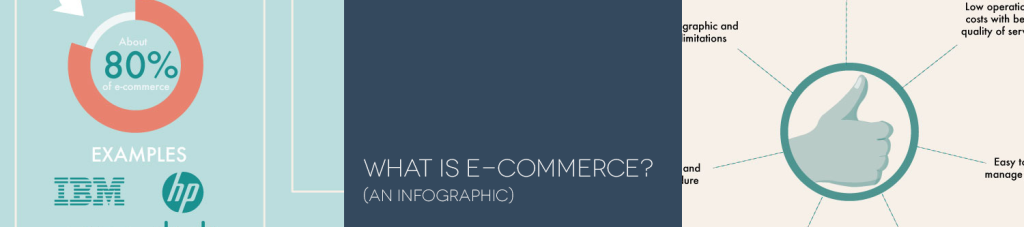
To ease into the weekend and let your minds breathe, we have a wonderful infographic by Miva Merchant. Most “normal” people have an idea of what e-commerce is and what it does, but what is it REALLY capable of? Read statistics and definitions that will explain (with great design, of course) exactly what goes into e-commerce.
 There are two things that e-business owners hate, one -abandoned shopping cards and two – people not returning to their business (granted, the two do correlate). Now there may be various factors going exactly into why this is happening, but there is one factor that could be solved with ease: the shopping process. There are various online stores that bombard their potential customers with long check out forms, multistage shopping carts, and incredibly hard to understand commands. It’s more than tiresome when you’re trying to just buy one product and you have to go through what seems like 100 light years worth of pages and boxes to fill out. The more you think about it, the more you realize you’d rather be looking for a different website with what you need than checking out here. This is why one-click payments were created! To make shopping less annoying and more conversion oriented.

M-commerce is sweeping the world as stores fight for customers. With an increased amount of shoppers reaching for their mobile devices, E-commerce (and physical stores alike) is taking mobile optimization more and more. There are three factors to understanding why mobile commerce is becoming such a powerful platform: convenience, mobile apps, the spread of 4G.
What exactly is mobile commerce? Investopedia defines m-commerce as the use of wireless handheld devices such as cellular phones and laptops to conduct commercial transactions online. However, this definition can be expanded to tablets, interactive laptops, basically anything with a touch screen. To fully understand those three points, lets firstly look at some history behind mobile shopping:

Whenever a customer reads their card and/or bank statements, they most likely see dates and amounts of transactions, perhaps the account balance after each of them, and – depending on the bank – maybe some additional information as well. But among this data, they surely see transaction descriptors. As the name suggests, a transaction descriptor is meant to describe a particular payment in order to help to identify the transaction.
 If you’ve ever looked into accepting online credit card payments (and chances are that you have, the “Pay” in “PayLane” isn’t there just for funzies), you probably fear chargebacks more than a one-on-one meeting with your mother in law. That’s what friendly fraud is – a monster in the closet that you never knew about. For merchants, processing card not present transactions (so basically, all online credit card payments) the risk of receiving chargebacks is daunting, and rightly so, since it can be quite costly. But there is only so much that you as a merchant can do to protected yourself against them – sure, you probably have the friendliest customer support team in the whole wide world and a well worded terms of service agreement, but is that enough?
Well, it is.. sometimes. The biggest risk for any online retailer is selling non tangible goods, which are becoming more and more popular with every minute. Internet stores are basically flooded with all things digital, whether it’s a subscription to a magazine or that awesome new MP3 that’s stuck in the back of your head. These purchases that we often make with the click of only a few buttons (heck, with all these one click purchases, who isn’t tempted?) are perhaps the root of the problem.

To accept internet payments using PayLane, the first step is to create a test account. From a Merchants point of view, this account is crucial in the process of integrating with the system. It also serves as the first stage in collecting documents and information, needed to create a production account.
 When you apply for a merchant account at an e-commerce bank, sooner or later you will hear about a rolling reserve. Since you may then urgently need to clarify this term, please let me explain in advance what it refers to.
 CVV codes described in the previous part aren’t the only way to make your transactions secure. There are forms of security, which are based on the payer’s localization. However, you may also come across simpler solutions, where only entered data is verified.
An example of that could be AVS – its mechanism compares your address info given in the shopping order with details of the card holder. Depending on the degree and type of eventual errors, AVS returns an appropriate error code, which are the base of estimating the probability of a fraud. Contrary to appearances, it is not inconvenient to clients – the system can tell the difference between a real scam and a situation when a buyer made a spelling mistake.