 If you are an online payments newbie, no doubt you’re getting lost in all the new expressions, phrases and definitions. That’s why we come to your rescue with this 3-part introduction to payments safety. Today, we set off with CVV2.
read more
 Acquirer (also known as an acquiring bank or merchant bank). A financial institution and a member of a card association licensed with credit card companies. Best known card associations are Visa, MasterCard, American Express, JCB, Diners Club, China UnionPay.
Acquirer is a bank that accepts or acquires performed transactions with a use of credit and debit cards issued by all banks within the card association scheme.
read more
Chargeback – the return of funds to a consumer. It’s his protection guarantee and last line of defence. Chargebacks occur mostly due to fraudulent activity or consumer disputes.
A chargeback is usually requested by the cardholder and initiated by the card issuer. Most common reasons are that a consumer doesn’t recognize a specific transaction or isn’t satisfied with the purchased service/product and wants his money back.
Merchants usually prefer refunds, which are the same from the customer’s point of view (he gets his money back), but a lot better for the ebusiness owners. Merchants have to pay a relatively big fine for every chargeback; furthermore, lots of chargebacks make a merchant a risky one for acquirers, which can lead even to the end of their cooperation.
Of course if a chargeback request is unfounded, the merchant can prove this (he has a time limit to respond to a chargeback request) and convince the acquirer that there’s no reason to reverse the transaction.
Bottom line, being a cardholder you have the full right to request a chargeback whenever you think you deserve your money back. However, asking for a refund will make you more friendly towards the merchant and there’s a good chance you’ll get your money back (that is if you have a good reason).
And being a merchant… Simply be aware of this mechanism and provide good quality service or/and products.
read more
 These verbs – credit and debit – seem to confuse people. So let’s see if one shall be happy if the bank teller checks their account and says for example:
The full amount of the purchase has been credited to your account.
Surely, as it means that the full amount has been added to the account. As a noun used by accountants credit means an addition to certain accounts.
On the other hand we have a verb debit and the incoming example. Merchant has recently refunded a purchase price of 123 USD to one of his customers but cannot see it in his billing statement, therefore asking the acquiring bank if his refund was successful. The acquiring bank replied:
The merchant has been debited on 12.03.11 with the amount of 123 USD.
So the money have been withdrawn from the merchant’s account and the refund was handled properly.
When a bank account has a positive or debit balance,it means the bank owes money to the customer; and if it has a negative or credit balance – the customer owes money to the bank.
read more
Card Security Code – usually called CVV (Visa) or CVC (MasterCard); it’s a three or four digit code located on a credit card, but not encoded on the magnetic stripe. If a client can provide such a code, it proves that he actually is in possession of the credit card and didn’t use, for example, a card number generator or a copy (skimmed) of the card.
The most common code is CVV2 (or CVC2) used in card-not-present transactions. For Visa, MasterCard, JCB, Diners Club and Discover credit and debit cards, this is a three digit code printed on the back of the card. American Express differs a bit – they have a four digit code printed above the credit card number.
Also the names of the code differ. Apart from CSC we have:
- CVV2 (Card Verification Value) for Visa,
- CVC2 (Card Verification Code) for MasterCard,
- CID (Card Identification Number) for American Express and Discover.
read more
Issuer is an institution from which the consumer gets his credit card. Usually it’s simply a bank (hence the popular term issuing bank), but it might also be e.g. a credit union. Such bank is associated with credit card brands, like Visa, MasterCard or American Express.
The issuing bank is actually the institution, which grants you the credit. So they are the ones, who check your credit history, debts. And later they decide what your credit limit is.
read more
 Credit card – a plastic card (usually 85.6 × 53.98 mm ) which allows its owner to spend money on goods and services. It is possible to spend or withdraw money up to a certain limit.
The card issuer creates a revolving account and grants the cardholder a line of credit. After that the cardholder may borrow money to pay a merchant.
read more
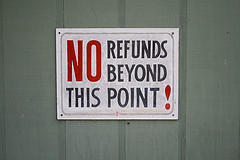 Refund – it’s the money (or its transfer) which a customer receives from a merchant after making a complaint. The whole process usually looks like this:
- a merchant receives a complaint from a customer
- after analyzing the complaint, the merchant decides whether to refund the whole transaction, just part of it or refuse to give back any money at all
- if the merchant decides to refund, it makes a proper request-usually instructions are passed to the acquiring bank via PSP
- the acquiring bank contacts the issuing bank, which pays the money to the customer
read more
Line of credit is an arrangement between a financial institution and a customer. In other words these are the terms of a credit. They define a maximum loan balance that the borrower will be allowed to maintain.
The terms offered to a customer depend on many factor like, for example, his credit history.
How does it differ from a loan?
Usually there are several advantages over loans:
- the application process is simpler (also the approval takes days, not weeks)
- a customer (borrower) can draw money at any time (of course if the credit limit is not exceeded)
- a customer isn’t charged on the money that wasn’t used
- there is more flexibility in repayments
Terms, which can mean the same: tradeline, credit line, LOC
read more
 Credit limit is the maximum amount of credit that a certain financial institution will extend to its costumer. Usually this term is used in two cases:
- a bank extends credit to its costumer,
- a credit card company extends credit on a single credit card.
What does it really mean?
A credit limit is simply the amount of money which a customer (debtor) is allowed to take on a particular line of credit (which is the commitment between a bank and its client).
Actually the second case is rather more often. Here a credit limit is the maximum amount of money that the owner (the cardholder) of the particular credit card can take out on this card. This means he or she can buy goods or services only until reaching such limit. After that the debt must be paid in order to use the credit card again.
The limit itself is based on many factors including the lenders cashflow, the debtors ability to pay his debts etc.
Terms, which can mean the same: credit cap
read more
