 A chargeback means returning funds to a customer. It’s forced by the issuing bank and causes merchants a lot of problems, wasting their time and money. So obviously nobody likes a chargeback. Most merchants will do a lot, to avoid them. Even if their policy doesn’t allow refunds, they’ll probably give one to a client just to make him cancel the chargeback request.
So how to avoid chargebacks?
I won’t delude you that there is one efficient method. Sorry, chargebacks are troublemakers for all merchants and it’s going to stay that way – at least for some time. But it doesn’t mean, that you can’t do anything to avoid them.
If you get a chargeback request, than you usually have some time to prove your innocence. This means convincing the bank, that the client’s request is unjustified.
But that’s fighting the symptoms. It’s just saving your hide, not avoiding the danger. Let’s focus on the causes.
read more
 Credit card – a plastic card (usually 85.6 × 53.98 mm ) which allows its owner to spend money on goods and services. It is possible to spend or withdraw money up to a certain limit.
The card issuer creates a revolving account and grants the cardholder a line of credit. After that the cardholder may borrow money to pay a merchant.
read more
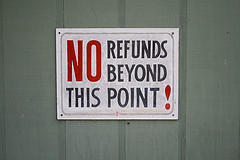 Refund – it’s the money (or its transfer) which a customer receives from a merchant after making a complaint. The whole process usually looks like this:
- a merchant receives a complaint from a customer
- after analyzing the complaint, the merchant decides whether to refund the whole transaction, just part of it or refuse to give back any money at all
- if the merchant decides to refund, it makes a proper request-usually instructions are passed to the acquiring bank via PSP
- the acquiring bank contacts the issuing bank, which pays the money to the customer
read more
Line of credit is an arrangement between a financial institution and a customer. In other words these are the terms of a credit. They define a maximum loan balance that the borrower will be allowed to maintain.
The terms offered to a customer depend on many factor like, for example, his credit history.
How does it differ from a loan?
Usually there are several advantages over loans:
- the application process is simpler (also the approval takes days, not weeks)
- a customer (borrower) can draw money at any time (of course if the credit limit is not exceeded)
- a customer isn’t charged on the money that wasn’t used
- there is more flexibility in repayments
Terms, which can mean the same: tradeline, credit line, LOC
read more
 Credit limit is the maximum amount of credit that a certain financial institution will extend to its costumer. Usually this term is used in two cases:
- a bank extends credit to its costumer,
- a credit card company extends credit on a single credit card.
What does it really mean?
A credit limit is simply the amount of money which a customer (debtor) is allowed to take on a particular line of credit (which is the commitment between a bank and its client).
Actually the second case is rather more often. Here a credit limit is the maximum amount of money that the owner (the cardholder) of the particular credit card can take out on this card. This means he or she can buy goods or services only until reaching such limit. After that the debt must be paid in order to use the credit card again.
The limit itself is based on many factors including the lenders cashflow, the debtors ability to pay his debts etc.
Terms, which can mean the same: credit cap
read more
